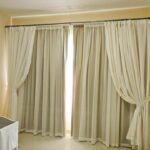
Floor-to-ceiling windows in Singaporean homes are a particularly harmonious example of Japandi, a design philosophy that combines Scandinavian functionality with Japanese minimalism. These large glass surfaces, which are typical of contemporary HDB apartments, BTO units, condos, & landed properties, offer both a chance for an abundance of natural light & a challenge in terms of controlling heat, sun glare, & privacy. For such large windows, choosing the right Japandi curtains necessitates careful consideration of materials, color, style, and practical functionality to ensure that the aesthetic complements Singapore’s climate. Recognizing the Japanese Window Treatment Style. In order to create serene & practical spaces, the Japandi aesthetic is distinguished by a dedication to natural materials, clean lines, and a muted color scheme.
Curtains become an important visual component for floor-to-ceiling windows, impacting the room’s appearance as well as its environmental control. In a Japanese interior, the choice of curtain is more than just ornamental; it is essential to the overall design philosophy of warmth, simplicity, and thoughtful craftsmanship. fundamental ideas of Japanese curtain design. Fundamentally, Japandi values a calming atmosphere and organic elegance.
When selecting the perfect Japandi curtains for your floor-to-ceiling windows, it’s essential to consider not only the aesthetic but also the functionality of the window treatments. For those living in tropical climates, understanding how different materials and styles can withstand humidity and heat is crucial. A related article that provides insights into this topic is available at Venetian Blinds in Tropical Climates, which discusses how to choose the right window coverings that complement your interior design while also being practical for your environment.
This directly affects the choice of curtains by favoring natural-looking materials & subtle finishes. The objective is to attain visual tranquility while attending to pragmatic requirements like privacy and light control, which are especially pertinent in crowded urban settings like Singapore. Integrating aesthetics and functionality. The usefulness of curtains in Singapore’s tropical climate cannot be disregarded, even though aesthetics are important.
For floor-to-ceiling windows, Japandi curtains must successfully block the intense equatorial sun in order to improve the home’s thermal comfort. The core of the Japandi philosophy is this fusion of form and function, which guarantees that utility is not sacrificed for beauty. The choice of materials for Japanese curtains. Any Japandi curtain’s material is its cornerstone. Material selection is crucial for floor-to-ceiling windows because the fabric’s drape and tactile quality are amplified.
In keeping with the aesthetic’s emphasis on authenticity and a connection to nature, natural fibers are always chosen over synthetic ones. Natural fibers, such as organic cotton and linen, are prioritized. Because of its natural texture, graceful drape, and longevity, linen is a popular material for Japandi curtains. In keeping with the handcrafted feel that is frequently connected to this style, its slightly uneven weave adds a subtle visual interest.
When selecting the perfect Japandi curtains for your floor-to-ceiling windows, it’s essential to consider not just the aesthetic but also the functionality and light control they provide. For more insights on enhancing your home decor with stylish window treatments, you might find this article on curtain design tips particularly helpful. It offers a range of ideas that can complement your Japandi style while ensuring your space remains inviting and serene.
| Criteria | Considerations |
|---|---|
| Material | Choose natural fabrics like linen or cotton for a Japandi look |
| Color | Opt for neutral tones such as beige, grey, or off-white |
| Length | Ensure the curtains reach the floor or slightly puddle for an elegant look |
| Texture | Consider a subtle texture like a light weave for added interest |
| Functionality | Choose curtains with blackout or light-filtering capabilities for practicality |
Because it allows air to circulate when curtains are drawn, linen’s breathable quality is also advantageous in Singapore’s humid climate. Compared to linen, organic cotton has a more uniform appearance and a softer handfeel, making it a great alternative. Both organic cotton and linen have the capacity to filter light beautifully, producing a diffused glow as opposed to a harsh glare, and they both add to a calming atmosphere.
When selecting the perfect Japandi curtains for your floor-to-ceiling windows, it’s essential to consider not only the aesthetics but also the functionality of your window treatments. For instance, you might find it helpful to explore the differences between motorised and manual systems, as they can significantly impact your overall experience with your curtains. To learn more about these options, check out this informative article on motorised blinds compared to manual systems. Understanding these choices can help you create a harmonious and practical living space that embodies the Japandi style.
Sustainably sourced fabrics, like those with OEKO-TEX® certification, further align with Japandi’s conscious living philosophy by guaranteeing that the materials are made with social and environmental responsibility in mind. These materials complement a thoughtful approach to home furnishings in addition to having a nice appearance. Sustainable Decisions for Mindful Living. A dedication to environmental stewardship is demonstrated by the choice of recycled or OEKO-TEX® certified sustainable fabrics, which go beyond their visual appeal. Selecting materials with minimal impact is in perfect harmony with the mindful principles of Japanese design in a world where people are becoming more conscious of their ecological footprint.
These selections demonstrate a comprehensive approach to home décor while also promoting ethical production methods and a healthier indoor environment. Considerations for the color scheme and pattern. Because of the design’s emphasis on natural tones and restraint, Japandi curtains have a naturally subdued color scheme. Shades that evoke calm & contribute to a serene atmosphere are usually preferred over vibrant ones. Hues that are muted and earthy.
Earth tones and subdued hues should make up the majority of the color scheme in order to preserve the minimalist look. Off-white, beige, light grey, taupe, and soft green hues fall under this category. These hues create a peaceful background for everyday life and go well with the natural materials frequently used in Japanese interior design.
When it comes to floor-to-ceiling windows, these muted hues keep the architectural element of the window from being overpowered by the curtains. These subdued hues aid in reducing the intense sunlight without absorbing too much heat in Singapore’s bright surroundings. Light-colored textiles reflect more sunlight, which lowers interior temperatures.
This is a useful benefit in landed homes, condos, and HDBs alike. Artisan details and subtle patterns. Subtle textures and subtle designs can add depth without upsetting the minimalist aesthetic, even though bold patterns are usually avoided. Indigo Shibori patterns are one way to introduce considerations for artistry and craftsmanship. These patterns can offer a distinctive, handcrafted touch that complements the Japanese appreciation of artisan details because of their organic, frequently abstract designs.
The secret is to keep patterns integrated and subtle so they serve as an accent rather than a focal point. Maintaining a simple fabric with a rich texture is often preferred for a more subdued appearance, letting the material’s inherent drape and weave offer visual interest. When adding pattern, make sure it blends in with the room’s existing features, such as wall finishes or furniture textiles. Instead of appearing as a stand-alone decorative element, the pattern should feel harmonious and integrated.
Optimal Light and Privacy Control through Layering. It’s difficult to control light, heat, and privacy in Singapore’s floor-to-ceiling windows. In keeping with the practical aspect of Japandi design, layering various window treatments is frequently the most successful approach. This method enables flexible control both during the day and at night. Sheer curtains for filtered light and seclusion during the day.
Natural sheer curtains should normally be the first layer. Harsh sunlight is filtered by materials like organic cotton or linen sheers, which diffuse it into a gentle, ambient glow that brightens the space without producing glare. This is especially helpful in HDB and condominiums where there may be a lot of direct sun exposure. Sheer curtains offer a degree of privacy during the day, enabling inhabitants to take advantage of natural light without feeling totally exposed—a common worry in urban areas.
They provide a subtle barrier while keeping a connection to the outdoors. Options for Blockout for Heat Control & Evening Privacy. Heavy curtains or curtains with a blockout lining are necessary behind the sheer layer. These are essential for evening privacy because they guarantee that, once artificial lights are turned on, the interior of the house is totally hidden.
Also, blockout linings provide substantial thermal advantages, which are essential in Singapore’s tropical climate. They contribute to energy efficiency by keeping cool air inside the space and preventing heat gain from the strong afternoon sun. Blockout is an essential feature for bedrooms in HDBs, BTOs, and condos because total darkness is frequently preferred for peaceful sleep.
Sheers and blockout curtains work together to provide flexible light control: either both layers are closed for complete darkness & privacy, or sheers provide full light and partial privacy. Japandi design’s adaptability is a useful feature. Track systems and curtain style. The style and track system of floor-to-ceiling curtains greatly impact their visual impact. These decisions should be influenced by Japanese design, which places a strong emphasis on simple, uncluttered lines. Floor-length panels’ elegance.
Floor-length panels are typically used for windows that reach the ceiling. They produce a continuous vertical line that gives a space a feeling of height & refinement. In order to create a sophisticated appearance, the curtains should ideally just skim the floor rather than pooling excessively, which can look messy and collect dust more easily. These panels are a focal point without being unduly elaborate because of their sheer size, which greatly enhances the overall appearance of a large window.
Discreet track systems and wave fold headings. Wave fold headings on ceiling-mounted tracks are strongly advised in order to preserve the simple, minimalist lines typical of Japandi. A wave fold, sometimes referred to as an S-fold, produces a tidy, modern pattern of soft, continuous undulations.
This design flows naturally and reduces bulk at the top of the curtain. The actual track system ought to be covert. Ideal are white or color-matched tracks that move smoothly between walls. The illusion of height is further enhanced & a smooth transition from ceiling to floor is produced by ceiling-mounted tracks. The most minimalist appearance is provided by recessed tracks, which conceal the track inside a ceiling cavity. However, this frequently necessitates planning during the building or remodeling stage.
The intention is for the hardware to virtually vanish so that the fabric and its neat folds take center stage. Installation and custom fitting. Custom fit is often necessary due to the distinctive size of floor-to-ceiling windows, particularly in BTO apartments, HDBs, and condos with different layouts. Seldom do off-the-shelf options offer the accuracy needed for such noticeable windows. Precision Dimensions Made to Measure.
Choosing made-to-measure dimensions guarantees that curtains will fit precisely across the width of the window & from top to bottom. Because poorly fitting curtains can jeopardize thermal insulation and light blockout, this accuracy is essential for performance. In keeping with the exacting standards of Japanese design, which place a premium on attention to detail, a custom fit also results in a polished, professional appearance.
The intended aesthetic can be diminished by improperly sized curtains, which can look awkward on a window that would otherwise be elegant. Large floor-to-ceiling windows often require professional measurement and installation, especially when dealing with intricate ceiling structures or integrated smart home systems for motorized operation. Climate Considerations for Homes in Singapore.
Singapore’s tropical climate, which is marked by intense heat and humidity, offers unique opportunities and challenges when choosing curtains. Japandi curtains can be tailored to flourish in this setting thanks to their careful design and emphasis on natural materials. Handling Sun and Heat. The strong equatorial sun requires curtains that provide efficient insulation & heat reflection.
Light-colored textiles, particularly those with blockout linings, work well to reflect sunlight away from the interior and minimize heat gain. In order to maintain comfortable interior temperatures in HDBs, condos, and landed properties, thermal management is essential for windows facing east or west, where sun exposure is most direct & intense. The load on the air conditioner can be greatly reduced with the right curtains, resulting in energy savings. Maintenance and Humidity. Natural textiles may be impacted by high humidity, which could result in mildew if curtains are neglected or ventilation is inadequate.
Both selecting breathable materials, such as cotton and linen, and making sure the space has enough air circulation are beneficial. These problems can be lessened with routine cleaning & attention to ventilation, especially in enclosed areas. By allowing moisture to escape and preventing the damp feeling that can occasionally accompany high humidity, fabrics with good air permeability contribute to a healthier indoor environment. Singaporean Japandi curtain price ranges. Depending on the material, customization, and motorization options, Japandi curtains for floor-to-ceiling windows in Singapore can vary greatly in price.
This is a functional as well as aesthetic investment. Pricing based on materials. Organic Cotton/Linen Sheers: Depending on fabric weight & quality, sheers for a typical HDB 3-meter floor-to-ceiling window may cost between S$300 and S$800. Linen/Organic Cotton Blockout Curtains: Because of the larger fabric volume and lining, a comparable window should cost between S$600 and S$1,500.
Sustainable/OEKO-TEX Certified Fabrics: High-end sustainable choices may cost an additional fifteen to thirty percent. Costs for installation and customization. A large percentage of the cost is usually attributed to made-to-measure services, particularly for large floor-to-ceiling windows. Depending on the complexity, professional measurement and installation for a single large window can cost anywhere from S$150 to S$300 or more. Depending on length and mechanism, track systems, especially ceiling-mounted or wave-fold specific tracks, can add between S$100 and S$400 per window.
Integration of smart homes and motorized curtains. For floor-to-ceiling windows, motorized curtains are the biggest investment, particularly when combined with smart home systems. Excluding the fabric, a single motorized track for a three-meter window can cost between S$800 & S$2,000.
This range will depend on the motor selected, compatibility with smart homes, & installation difficulty. For many owners of condos & landed properties, motorization is a wise long-term investment because it provides unmatched convenience and can improve energy efficiency through scheduled operation, despite the higher initial cost. longevity and upkeep. Japandi curtains will last a long time and continue to be beautiful with proper care, protecting the investment. Tips for general cleaning.
Surface dust must be removed by routine light dusting or vacuuming with an upholstery attachment, particularly for floor-length curtains that are likely to gather dust close to the floor. For a more thorough cleaning, adhere to the manufacturer’s instructions. For natural linen and many cotton curtains, professional dry cleaning is usually advised to avoid shrinkage or damage.
Minor stains can be prevented from setting by spot cleaning them right away. Making sure curtains are completely dry after cleaning is essential to stopping the growth of mildew in Singapore’s high humidity. Expected lifespan. High-quality Japandi curtains made of organic cotton or linen can last up to 15 years or more with the right maintenance. The fabric’s quality, sun exposure, cleaning frequency, & daily use are all factors that affect longevity.
Although replacement parts are frequently available, the mechanical components of motorized systems typically have a lifespan of five to ten years. Following maintenance instructions prolongs the curtains’ useful life and maintains their aesthetic appeal, making them a long-lasting feature of the house. A Singaporean home’s choice of Japandi curtains for floor-to-ceiling windows is a conscious design choice that strikes a balance between practical necessity & aesthetic purity.
Homeowners can create calm, practical spaces that are both aesthetically pleasing & climate-resistant by concentrating on natural materials, using a restrained color scheme, layering light control effectively, and using appropriate styling.
.
FAQs
What are Japandi curtains?
Japandi curtains are a combination of Japanese and Scandinavian design elements, featuring simple, minimalist designs with natural materials and neutral colors.
What should I consider when choosing Japandi curtains for floor-to-ceiling windows?
When choosing Japandi curtains for floor-to-ceiling windows, consider the fabric, color, and length of the curtains to complement the overall Japandi aesthetic and to effectively cover the large windows.
What type of fabric is best for Japandi curtains?
Natural fabrics such as linen, cotton, or hemp are ideal for Japandi curtains, as they align with the natural and organic elements of Japandi design.
What colors work well for Japandi curtains?
Neutral colors such as white, beige, light grey, or soft pastels are commonly used for Japandi curtains to create a calming and harmonious atmosphere.
How can I ensure the Japandi curtains fit the floor-to-ceiling windows properly?
To ensure a proper fit for floor-to-ceiling windows, measure the height and width of the windows accurately and consider custom-made or adjustable curtains to achieve the desired look.