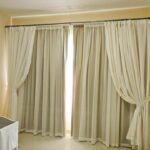
The Japandi aesthetic offers a calm & uncluttered approach to interior design through a harmonious fusion of Scandinavian functionality and Japanese minimalism. This translates to bedrooms that encourage relaxation, peace, & a close relationship with the natural world. In order to achieve this balance, curtains are essential because they serve as both window coverings & essential components of the room’s overall design scheme. Choosing and styling curtains for a Japandi bedroom in Singapore, where the climate offers special opportunities and challenges, calls for careful consideration of light, privacy, heat mitigation, and maintenance while upholding the fundamentals of this well-liked design aesthetic. Natural materials, purposeful simplicity, & an emphasis on functionality are characteristics of the Japandi style.
Applying this to bedroom curtains means eschewing elaborate designs, bulky materials, or vivid hues. Rather, a calm atmosphere is created by emphasizing soft textures, subdued color schemes, and crisp lines. Consider the curtains as a silent conductor that manipulates the privacy and natural light in your private haven to keep it a peaceful place.
When styling Japandi bedrooms with curtains, it’s essential to consider not only the aesthetic but also the functionality of your window treatments. For instance, if you’re dealing with west-facing windows that let in excessive heat, you might find the article on how to block heat from west-facing windows particularly helpful. This resource offers practical tips on selecting the right curtains that can enhance your Japandi decor while effectively managing temperature and light in your space.
The objective is to create a space that promotes healthy sleep, which is essential to wellbeing, and is also aesthetically beautiful. Japandi’s foundation is materiality and texture. In order to fully represent the Japandi culture, fabric selection is crucial.
Natural fibers are preferred because of their innate beauty and capacity to create a cozy, breathable atmosphere. The traditional Japanese fabric is linen. One could argue that linen is the ideal fabric for Japanese interior design. Its natural breathability, soft drape, and slightly rumpled texture all contribute beautifully to the aesthetic.
The ability of linen to wick away moisture is a huge benefit in Singapore’s humid climate, as it helps control the temperature of the room and lessen the perception of dampness. Flax’s natural properties. The natural flax color of 100% linen panels creates an unmatched minimalist zen atmosphere. Without being overpowering, the subtle weave variations provide visual interest. Also, linen ages well, becoming softer with time, which adds to its allure. Because its natural fibers are antimicrobial and hypoallergenic, they help create a healthier sleeping environment, which is particularly crucial in tropical climates.
If you’re looking to enhance the serene aesthetic of your Japandi bedroom with the perfect curtains, you might find inspiration in a related article that discusses various curtain styles and their impact on interior design. This resource offers valuable insights into how different fabrics and colors can complement the minimalist and functional nature of Japandi decor. For more information, you can check out this helpful guide on choosing the right curtains for your space by visiting this link.
| Aspect | Recommendation | Details | Benefits |
|---|---|---|---|
| Curtain Material | Natural fabrics | Linen, cotton, or bamboo fabrics | Enhances organic, minimalist feel; allows light diffusion |
| Curtain Color | Neutral tones | Beige, off-white, soft gray, or muted earth tones | Maintains calm and serene atmosphere typical of Japandi style |
| Curtain Length | Floor-length | Curtains that gently touch or puddle on the floor | Adds elegance and elongates room height visually |
| Curtain Style | Simple and unadorned | Minimal pleats or flat panels without heavy patterns | Supports clean lines and uncluttered aesthetic |
| Curtain Rod | Matte black or natural wood | Simple, slim rods that blend with room decor | Complements Japandi’s blend of Scandinavian and Japanese elements |
| Light Control | Sheer or semi-sheer curtains | Allows natural light while maintaining privacy | Creates soft, diffused lighting enhancing tranquility |
| Layering | Optional layering with blackout curtains | Use neutral blackout curtains behind sheer panels | Provides flexibility for light control and privacy |
Blends of cotton for versatility. Cotton blends can provide a more affordable yet still beautiful alternative to pure linen, which is the best option. Blends can also improve ease of maintenance and durability, two important factors for any Singaporean homeowner.
If you’re looking to enhance the serene aesthetic of your Japandi bedroom with the perfect curtains, you might find inspiration in a related article that discusses various curtain styles and their impact on interior design. This resource offers valuable insights on how to choose the right fabrics and colors to complement your space. For more information, check out this helpful guide on curtain styles that can elevate your bedroom’s ambiance.
Maintaining the subtle feel requires choosing blends with a matte finish as opposed to a glossy one. Accepting Diffused Light in Sheer Fabrics. Japandi bedrooms are not complete without sheer curtains.
A soft, diffused glow that promotes relaxation can be produced by gently filtering natural light. Earthy tones, beige, and whites. Sheer draperies in earthy, white, or beige hues work especially well. A feeling of lightness and airiness is created by these neutral colors, which also go very well with the Japandi color scheme.
They are perfect for maintaining privacy without letting too much natural light into the space, which keeps it from feeling cramped or dark. making the most of airy light. Floater, lightweight sheers are a defining characteristic of this look. They add a dynamic yet understated element to the space as they move softly in any breeze.
Consider using heavily bleached or washed linens that replicate the airy feel of sheers for a similar effect with even less visual weight. Alternatively, windows can be covered with contemporary frosted film to offer a comparable degree of privacy and light diffusion without the use of actual fabric. Color scheme: A Calm Symphony. The intentionally subdued color palette of Japandi is reminiscent of nature and encourages serenity. The foundation is made up of muted neutrals.
The foundation of the Japandi palette is composed of muted neutrals. Consider earthy browns, creamy whites, warm beiges, and gentle greys. While avoiding visual clutter, these colors provide a unified and peaceful background that lets other room features shine. Deep Blues & Earthy Greens.
Think about using muted teal, soothing sage, or deep forest green to add subtle depth and a sense of connection to nature. These colors provide a grounding effect and can be used as accent colors or as the main color of curtains. Contrast’s Power. Despite the neutral color scheme, subtle contrasts can be used to good effect.
For example, adding dimension can be achieved by combining a light, airy sheer with a slightly deeper, more textured linen. Contrast in this context refers to subtle changes in tone and texture rather than overt conflicts. Beyond color & material, the overall Japandi aesthetic is greatly influenced by the way curtains are styled & hung. The emphasis is still on functionality, simplicity, and a clear presentation. Using layers to control light & create depth.
A sophisticated technique that adds a touch of refined elegance and allows for flexible light control is layering curtains. Heavier drapes on sheer panels. Combining sheer panels with heavier drapes is a popular and very successful strategy. When more darkness or insulation is needed, the heavier drape can be drawn, while the sheer layer offers a base of diffused light and privacy.
The dynamic interplay of light & shadow throughout the day is provided by this combination. Waved styles and ripple folds. Choose waved or ripple fold curtain styles for a modern, sleek look that adheres to Japandi principles. These pleating techniques produce smooth, symmetrical lines that elevate without being unduly formal.
The gentle waves add to the peaceful atmosphere of the space and resemble natural features. Complete wall installations to create a calming atmosphere. An eye-catching yet subtle method of defining a window space or even a whole wall is to install full wall curtains.
Essentially framing the window or serving as a soft, textile backdrop, this technique creates a peaceful, restful sleeping environment. Improving a Sense of Peace. Curtains that hang from wall to wall and ceiling to floor can give the impression that a space is bigger and more unified.
A bedroom intended for rest and renewal would benefit greatly from the cocooning safety that this envelopment offers. Rods & Hardware: The Inconspicuous Backbone. In a Japanesedi design, the hardware used to hang the curtains is just as significant as the fabric. Rods that are minimalist.
It is best to use minimalist rods. They should have simple, useful designs that blend in perfectly with the rest of the interior decor. Metal that is matte black. Rods of matte black metal provide a subtle yet striking contrast, especially when paired with lighter walls or textiles. Without being overtly ostentatious, this elegant finish adds a touch of modern sophistication. Woody tones that are warm.
The natural materials that are preferred in Japanese design are complemented by warm wood rods with natural or lightly stained finishes. They complement wooden flooring or furniture and provide an organic warmth. To keep the minimalist silhouette, it’s important to select rods with straightforward finials or none at all. The principles of Japandi curtains can be applied to various bedroom spaces or types of homes.
The Main Bedroom: A Calm Sanctuary. Curtains for the main bedroom should prioritize light control and maximum tranquility. Light and privacy in balance. An ideal balance can be achieved with floor-to-ceiling curtains made of a neutral blend of linen. For example, to contrast with wooden elements in the space, muted neutral hues, deep green, or taupe can provide warmth and texture. These heavier drapes can be layered with sheer panels to provide flexibility throughout the day, with the sheer panels being used for waking hours and the fuller drapes for sleeping.
complete window coverage. For a cohesive appearance, take into account full window coverage. By doing this, visual distractions are reduced and the impression of a cozy, enclosed space is improved. Large windows and balcony doors provide a smooth transition between indoor and outdoor spaces. Large windows or balcony doors that lead to outdoor areas are common in Singaporean homes, particularly condos and landed properties.
It functions as a visual buffer. Natural linen sheers that are light and floaty are great for these spaces. They offer some seclusion and shelter from the intense Singaporean sun while still letting you take in the scenery.
When it’s colder outside or you want total darkness, these can be used with heavier curtains. Taking humidity into account. For spaces that are directly exposed to moisture, like opening onto a balcony, take into account linen-cotton blends, which might provide a little more moisture resistance and quicker drying times than pure linen. HDB and BTO Bedrooms: Making the Most of Light & Space. Curtains are essential for creating the illusion of larger, lighter spaces in HDB & BTO apartments, where space can be limited.
A vertical focus. Particularly good at directing the eye upward, floor-to-ceiling curtains give the impression that the room is larger and the ceilings are higher. One of the main principles of effective space use is this vertical emphasis. choosing lighter materials. To keep curtains from overpowering a small space, opt for lighter textiles and more muted hues.
With a slightly heavier panel used only for blackout if desired, sheer curtains can take center stage. Bedrooms on Landed Properties: Elegance and Simplicity Collide. Larger curtain installations are possible on landed properties because they frequently have larger window areas. pieces that make a statement. Rich, textured linen floor-to-ceiling curtains can be used as focal points to ground the aesthetic of the space.
The muted color scheme preserves the Japanese minimalism, while the fabric’s inherent texture will provide depth. Functionality through Layering. Larger windows make the ability to layer curtains even more beneficial, providing better control over privacy, light, and heat. In order to control the intensity of the tropical sun, this is especially crucial. While choosing and styling curtains for a Japandi bedroom, Singapore’s tropical climate poses unique challenges.
The secret is to create a cozy space by utilizing natural materials and clever layering. Handling Sunlight & Heat. Bedroom temperatures can rise rapidly in the strong tropical sun. The main defense against this is curtains.
Light-colored textiles to reflect light. Lighter-colored fabrics are generally more effective at reflecting solar radiation than at absorbing it in Singapore’s heat, even though dark colors are occasionally preferred for blackouts. Instead of letting in harsh, direct sunlight, sheer whites, beiges, & pale neutrals aid in light diffusion. The linen’s thermal properties. A certain amount of thermal insulation is provided by linen’s inherent breathability. Unlike some synthetic materials, it permits air to circulate, preventing heat from being trapped between the windowpane and the fabric.
Fighting Humidity. Rooms with high humidity can feel uncomfortable and damp. Breathable Materials. Selecting breathable materials such as cotton & linen is essential. By letting moisture out, these natural fibers avoid the clammy sensation that comes with high humidity.
ventilation and airflow. Even though curtains can control light and offer privacy, it’s important to make sure they don’t block natural airflow. If ventilation is a top concern, this entails designing curtains that don’t completely seal windows and permitting times when windows are open.
For every Singaporean homeowner, the price & longevity of curtains are important factors. A longer-term investment is frequently in line with the Japanesedi aesthetic, which emphasizes natural, high-quality materials. The cost elements. Numerous factors affect the cost of Japandi-style curtains in Singapore. Quality of Material.
In general, premium blends and pure linen will cost more than cotton or synthetic substitutes. Also important are the fabric’s finishing and weave density. installation and manufacturing. Custom curtains will cost more to make, particularly if they are made for a particular window size or have intricate pleating patterns like ripple folds. Another consideration is expert installation, especially for full-wall or floor-to-ceiling installations. The approximate range of costs.
The price range for high-quality linen or linen-blend curtains is likely to be quite wide. Standard window sizes in HDBs or condos may cost between S$150 and S$400 per panel for materials and basic fabrication. The price per panel may increase to S$500 to S$1,000 or more for larger windows, intricate installations, or high-end fabrics.
Specialized motorized options or zip blinds would be in a different, typically more expensive, price range. longevity & robustness. The material, upkeep, and exposure to the weather all have a big impact on how long your curtains last. Durability and Natural Fibers.
With the right maintenance, high-quality cotton and linen curtains can last for ten to fifteen years or even longer. Natural fibers are often long-lasting. variables influencing durability. Over time, direct, extended exposure to sunlight can weaken & cause fading of fibers, particularly in Singapore’s harsh climate. Maintaining fabric integrity can be achieved through routine washing in accordance with care instructions.
Consider using curtains with UV-protective linings in areas that are frequently exposed to direct sunlight, or choose blends that are a little more durable. Particularly in Singapore’s climate, maintaining your Japandi curtains is crucial to maintaining their aesthetic appeal and extending their lifespan. Frequent cleaning. Dusting and light cleaning are essential for avoiding the accumulation of dirt and grime.
vacuuming. Vacuum your curtains on a regular basis with a low suction upholstery attachment. By doing this, allergens and dust are eliminated before they have a chance to embed themselves in the fabric. Every month, do this. Spot cleaning.
To prevent causing damage to the fabric fibers, spot clean minor stains right away using a moist cloth & a mild detergent. Blot rather than rub. Washing Guidelines.
Observe the care label provided by the manufacturer exactly. Cotton and Linen Maintenance. It is frequently possible to machine wash pure cotton & linen in cold water on a gentle cycle. Steer clear of strong detergents and excessive spinning. Washing them by themselves or with comparable textiles is frequently advised. drying. .
For natural fibers, air drying is usually the most effective technique. Hang them to dry, avoiding direct sunlight if possible, to avoid fading. Steer clear of tumble drying because the heat can damage and cause shrinkage. To avoid mildew in Singapore’s humid climate, make sure they dry completely.
Make sure there is adequate ventilation if you are drying indoors. Steaming vs. ironing. .
For delicate textiles like linen, steaming is frequently chosen over ironing for wrinkles and creases because it is less likely to result in damage or scorch marks. Always iron on the back of the fabric & use a low heat setting if ironing is required. Making use of curtain folds that ripple. Despite their beauty, ripple fold curtains can occasionally be more difficult to clean because of their pleated structure.
Several are made to be machine washed on a gentle cycle. Expert cleaning. Professional dry cleaning is a good choice for curtains or delicate fabrics that are extremely dirty. A dry cleaner with experience in natural fabrics is a must. You can design a calm and practical Japandi bedroom that blends in with Singapore’s distinct climate and way of life by emphasizing natural materials, subdued hues, & careful styling.
Your bedroom will continue to be a tranquil haven for many years to come thanks to the classic appeal of this style and sensible curtain selections.
.
FAQs
What is Japandi style in bedroom decor?
Japandi style is a blend of Japanese minimalism and Scandinavian functionality, focusing on simplicity, natural materials, and muted color palettes to create a calm and cozy bedroom environment.
What types of curtains work best for Japandi bedrooms?
Light, natural fabrics such as linen or cotton in neutral tones like beige, gray, or soft white are ideal for Japandi bedrooms, as they complement the minimalist and natural aesthetic.
How should curtains be hung in a Japandi bedroom?
Curtains in a Japandi bedroom should be hung close to the ceiling and extend beyond the window frame to create an illusion of height and openness, enhancing the room’s airy and spacious feel.
Can patterned curtains be used in Japandi bedroom design?
While Japandi style favors simplicity, subtle patterns inspired by nature or traditional Japanese motifs can be used sparingly, provided they maintain a muted color scheme and do not overwhelm the minimalist decor.
How do curtains contribute to the overall ambiance of a Japandi bedroom?
Curtains in a Japandi bedroom help control natural light, add texture, and enhance the room’s warmth and tranquility, all of which are essential elements in achieving the style’s serene and balanced atmosphere.