Curtains for Singaporean homes with floor-to-ceiling windows are a stylish solution. Floor-to-ceiling windows are becoming more and more common in Singapore’s compact urban landscape, where HDB apartments, BTOs, condominiums, and landed houses frequently have creative architectural designs. In addition to providing an abundance of natural light & frequently stunning views, these large glass panels pose special difficulties for homeowners in terms of controlling humidity, heat, sun glare, and privacy. This article offers useful insights for Singaporeans by examining the various factors and fashionable solutions that curtains provide for these prominent architectural features. Understanding Floor-to-Ceiling Windows in the Singaporean Context.
The year-round high temperatures, strong sun, and high humidity of Singapore’s tropical climate have a big impact on window covering selection. Despite their aesthetic appeal, floor-to-ceiling windows can serve as significant heat conduits, raising interior temperatures and increasing air conditioning energy use. Also, privacy is a top priority, particularly for HDB & condo owners in crowded neighborhoods where near-by buildings may reveal interior spaces through expansive window expanses. Singapore’s architectural styles, which range from the sleek lines of contemporary condominiums to the more diverse designs of landed properties, call for curtain solutions that both satisfy these functional climate and privacy needs & enhance the interior aesthetic. Curtains for tall windows are versatile.
For floor-to-ceiling windows, curtains provide a combination of aesthetic appeal and practical advantages that other window treatments might not be able to match. They give a room a sense of grandeur & completion by covering the entire vertical span of the window, which draws the eye upward & enlarges the room. Curtains made for tall windows offer better privacy, light control, & thermal insulation than just being aesthetically pleasing. Curtains’ benefits for floor-to-ceiling windows. Improved Insulation: In Singapore’s climate, curtains serve as an essential defense against the sun’s rays and heat.
Lined curtains or thicker fabrics can drastically cut down on heat gain, keeping rooms cooler & possibly reducing electricity costs. This is especially advantageous for HDB and condo apartments that receive direct afternoon sunlight. Superior Control of Privacy: When drawn, curtains provide total privacy for houses near other houses by serving as an opaque barrier against outside views. Unlike shorter window treatments, the full height guarantees that there are no gaps.
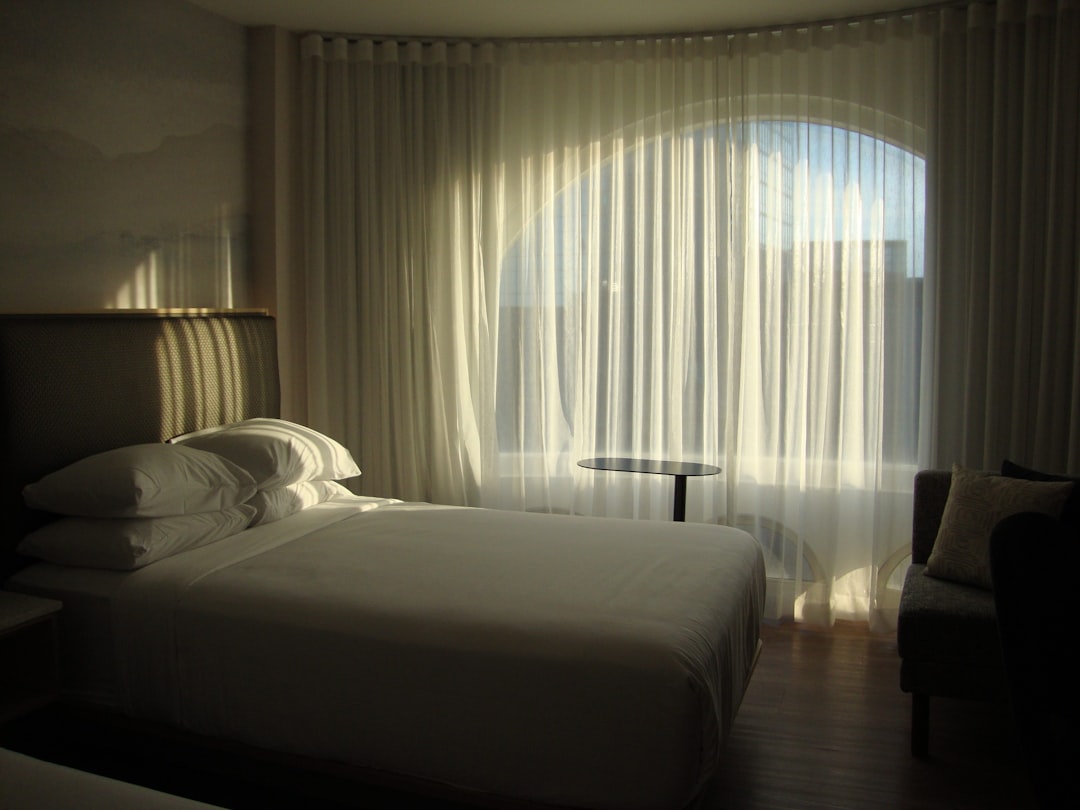
Effective Light Modulation: Curtains can be adjusted to allow various levels of light entry, from complete blackout for bedrooms to diffused light for living areas. Sheer options, which are in style for 2026, are perfect for reducing the intensity of intense tropical sunlight without sacrificing brightness. Impact and Style: Floor-to-ceiling curtains give a room texture, color, and softness while making a striking visual statement. They can serve as a focal point for a design scheme and make a substantial contribution to the overall aesthetic of the interior, fitting in with current trends that highlight exquisite drapes and natural textures.
| Metric | Details |
|---|---|
| Typical Curtain Length | Floor-to-ceiling (usually 96 to 108 inches or more) |
| Recommended Fabric Weight | Medium to heavy weight for better drape and insulation |
| Opacity Options | Sheer, semi-sheer, blackout |
| Common Curtain Width per Panel | 50 to 54 inches |
| Number of Panels Recommended | 2 to 4 panels depending on window width |
| Mounting Options | Ceiling-mounted track, wall-mounted rod |
| Energy Efficiency | Thermal curtains can reduce heat loss by up to 25% |
| Maintenance | Machine washable or dry clean depending on fabric |
| Average Cost Range | Varies widely based on fabric and size |
Sound Absorption: One important advantage of living in an urban area in Singapore is the ability of the fabric layers of curtains to absorb sound, lowering noise levels from nearby apartments or busy streets. Humidity Management: Although curtains cannot directly control humidity, they can help prevent moisture buildup behind drapes by using breathable fabrics and making sure there is adequate ventilation. This lowers the risk of mold growth in Singapore’s humid environment. Considerations & drawbacks.
Cost: Compared to standard-sized curtains or blinds, floor-to-ceiling window curtains are typically more expensive due to the enormous amount of fabric needed. The cost is also increased by customization for precise lengths. Maintenance: It may take more work to clean taller curtains because they can gather more dust. Long-term maintenance may require routine vacuuming or expert dry cleaning. Space Requirements: The stack-back space required when curtains are open needs to be considered, especially in smaller HDB or condo living spaces where wall real estate is at a premium.
Installation Complexity: To ensure that long, heavy curtains are mounted securely and function properly, strong hardware and frequently professional installation are needed. Important Decisions & Their Effects. The choice of curtain fabric is crucial because it affects not only the appearance but also the functionality in terms of heat, sun, and upkeep in Singapore’s particular climate.
2026 Trending Textiles.
Due to their sustainable qualities & ethereal light-filtering properties, organic linen and hemp are highly prized natural fibers. A “Grandma Chic” look or a biophilic design that incorporates nature would benefit greatly from sheer linen curtains, which soften direct sunlight delicately with 60–70% light transmission. Given Singapore’s high humidity, their ability to breathe & their superior resistance to mold growth make them an excellent choice.
Boucle, slub linen, & jacquard are examples of textured textiles that give a room depth and visual interest while providing a dramatic & comfortable feel. Jacquard has intricate woven patterns, slub linen has a casual, natural unevenness, and boucle offers a soft, looped texture. In particular, these thicker textiles work wonders for privacy and insulation in living rooms and bedrooms.
Thermal and Blackout Linings: For floor-to-ceiling curtains in Singapore, a separate thermal lining is strongly advised, regardless of the face fabric. These linings significantly enhance insulation, blocking out intense sun & heat, thereby contributing to cooler indoor temperatures and reducing air-conditioning usage. In order to create a dark sleeping environment, bedrooms must have blackout linings. Climate-Related Fabric Issues.
Fabrics that are breathable and moisture-resistant are better for Singapore’s humid climate. Although certain synthetic blends may be more resilient to UV deterioration, natural fibers such as linen can also function effectively with the right care and ventilation. Because they can occasionally retain moisture and eventually cause mildew, steer clear of extremely thick, dense synthetic fabrics without sufficient ventilation. Using floor-to-ceiling curtains to ventilate rooms on a regular basis is advised, particularly in areas without air conditioning.
Installation Methods and Grandeur Styling. The overall appearance and usability of floor-to-ceiling curtains are greatly influenced by how they are hung. When installed properly, a space can be elevated and given a refined, opulent appearance. The Golden Rule is to hang high and wide.
It is always advised by designers to hang curtains as high as possible, usually just below the crown molding or ceiling, and to extend the rod wider than the window frame. Even in HDB and condo units, this technique makes the windows appear even larger and the ceilings appear taller, maximizing drama. The view is preserved & the amount of natural light is maximized when the curtains are open because the wider rod enables the curtains to stack back entirely off the window. Finding the Ideal Length. Generally, the ideal length for floor-to-ceiling curtains is for the fabric to either puddle slightly or just skim the floor.
For hygiene and to avoid mold growth, particularly in humid areas, designers advise an inch of space above the floor while preserving the appearance of height. Ideal for bedrooms or formal living areas, a small puddle (1-3 inches on the floor) adds a more opulent & romantic look. Custom lengths between 80-120 inches are common to achieve this tailored look.
Hardware and Styles for Headers. Headers with pinch pleats: These tailored headers have a timeless, refined, and structured appearance because the fabric is gathered and stitched into pleats. They guarantee uniform drapes and even folds, adding to the polished finish—a popular element for floor-to-ceiling arrangements. Wave fold, also known as ripple fold, is a contemporary header style that produces gentle, continuous waves for a simple, minimalist look. It offers a continuous fabric flow & complements modern Singaporean interior design.
Grommet and Tab Top (Use with Caution): These styles sometimes look less formal with very tall curtains, but they are easier to install. Make sure the fabric is sufficiently heavy to sustain a good drape if it is used. Slim Hardware: For an emphasis on height and to avoid visual clutter, opting for slim, minimalist curtain rods or tracks is recommended. This makes the fabric the focal point and highlights the room’s vertical lines. Using layers to increase versatility.
One of the best ways to cover floor-to-ceiling windows in Singapore is to combine sheer & opaque drapes. Sheers: Soften the intense tropical sun by providing seclusion during the day while letting in diffused light. In line with ethereal and biophilic trends, they continue to feel light and airy. Drapes: Provide total privacy, light control, and thermal insulation when required, especially at night or during the hottest parts of the day.
Flexible control over light, heat, & privacy is made possible by this combination day and night. Integration with Smart Homes and Motorized Options. In Singapore, motorized curtains and motorized blinds are becoming more and more popular options for modern living, convenience, and energy efficiency in the age of smart home technology. In large spaces with floor-to-ceiling windows, motorization is especially desirable. Accessibility and convenience.
Heavy, tall curtains can be difficult to manually operate. Easy opening and closing of motorized curtains is possible with a button press, a remote control, or a smartphone app. This is especially beneficial for elderly residents or those with mobility issues, providing easy access to adjust light and privacy. Motorized curtains can be effortlessly retracted to provide easy access in homes with balconies. Controlling the climate and energy.
Motorized curtains are taken to the next level with smart home integration. To improve energy efficiency, systems can be set up to automatically open or close curtains in response to variables like the time of day, the amount of sunlight, or the temperature inside. To minimize heat gain and lessen the strain on the air conditioner, curtains can be set to close on the side of the house that receives direct afternoon sunlight.
On the other hand, to maximize natural light, they can open in the mornings. Given Singapore’s tropical climate, this proactive climate control is a huge benefit. Security and Privacy. Home security can also be improved with motorized curtains. Curtains can be set to open & close at different times while homeowners are away, simulating occupancy and discouraging possible intruders.
This helps residents of landed homes, HDBs, & condos feel more at ease. An analysis of motorized systems’ costs. The main disadvantage of motorized blinds and curtains is that they are more expensive initially than manual systems. The track system, motor, remote controls, and installation are all included in this investment.
Nonetheless, for many Singaporean homeowners looking for contemporary, energy-efficient living options, the convenience and possible long-term energy savings of large floor-to-ceiling windows make the cost worthwhile. Room-Specific Applications. Curtains for floor-to-ceiling windows should be chosen & styled according to the unique purpose and design of each space. areas for dining and living.
A large design statement can be made with floor-to-ceiling curtains in common areas like the dining room & living room. Layering sheer linen with heavier drapes (e. “g.”. offers the most flexibility in terms of light and privacy (boucle or jacquard). Sheer walls can protect views while reducing the intensity of the Singaporean sun during the day. Drapes offer seclusion & a comfortable setting in the evenings.
These commonly used spaces can benefit from motorized systems that improve user experience. bedroom spaces. Blackout features are often a top concern for bedrooms.
Thermal blackout linings on floor-to-ceiling curtains are perfect for creating a cool, dark sleeping environment. For those who want softer light entry during the day, these can be paired with sheer or light-filtering curtains. The focus should be on textiles that offer total privacy in addition to heat insulation. A blackout liner layered over organic hemp or linen provides both style and functionality.
Home offices and studies. Reducing glare is essential in a home office or study. Good light-filtering curtains, perhaps made of a slightly textured fabric, can reduce screen glare while letting in enough natural light.
Heavy drapes or even layered options can be taken into consideration, depending on the need for privacy and concentration. Access points for balconies. When it comes to floor-to-ceiling windows that act as a gateway to a patio or balcony, practical considerations are important.
The curtains in this area should be long-lasting & simple to use. Think about materials that can tolerate a little exposure to the weather if they are opened frequently. Especially in condos with large balconies, motorized options that gracefully retract are very useful for smooth indoor-outdoor transitions. Costs, lifespans, and maintenance in Singapore. Considering Singapore’s humid climate, proper maintenance is crucial to preserving the look and lifespan of floor-to-ceiling curtains. Maintenance Tips.
Weekly or biweekly vacuuming of curtains with an upholstery attachment is recommended for regular cleaning in order to get rid of dust & stop accumulation. For long curtains, this is essential. Spot Cleaning: Use a mild fabric cleaner appropriate for the curtain material to clean up spills or stains right away. Professional Cleaning: Because of their size and weight, it is usually advised to have them professionally dry cleaned or steam cleaned every one to two years, particularly for delicate or shrinking fabrics. Consult the manufacturer’s instructions. Humidity Control: To avoid moisture accumulation and possible mold or mildew, make sure there is adequate air circulation in rooms with curtains.
Use dehumidifiers or open windows from time to time. UV Protection (for outdoor facing): Use fabrics with built-in UV resistance or apply a UV-protective spray (first test on a discrete area) for curtains facing direct, strong sunlight. lifetime.
Depending on factors like fabric quality, exposure to sunlight and moisture, & upkeep, floor-to-ceiling curtains in Singapore can have wildly different lifespans. High-quality curtains can endure for ten to fifteen years or longer, especially if they have good linings. Fabrics that are less resilient or exposed to constant sunlight without the right maintenance may need to be replaced after five to seven years. The lifespan of motorized components usually ranges from five to ten years, contingent on motor quality & usage frequency. Singaporean cost ranges.
The cost of floor-to-ceiling curtains in Singapore is highly variable, depending on material, customisation, header style, and whether it’s a manual or motorised system. Basic to Mid-Range Fabric Only: For a typical floor-to-ceiling window (e.g. (g). , 3m height x 3m width), fabric costs can range from SGD 500 to SGD 1,500 for basic to mid-range materials like polyester blends, plain cotton, or basic linen, excluding tailoring & installation. Premium Fabrics: Organic linen, custom woven jacquards, or specialized thermal fabrics can push the cost for the same window up to SGD 1,500 to SGD 3,500+. Tailoring and Installation: Depending on complexity and panel count, professional installation and custom tailoring for floor-to-ceiling lengths usually cost an additional SGD 300 to SGD 1,000+ per window.
Motorized Systems: Including a motorization system can result in a notable increase in price. A simple motorized track and motor for a single floor-to-ceiling window can cost between SGD 800 and SGD 2,000+, while smart home integration costs more because it requires more hardware and programming. Total Project Cost: For an entire HDB 4-room flat or a 2-bedroom condo with several floor-to-ceiling windows, a full curtain installation (manual, mid-range fabrics) could range from SGD 3,000 to SGD 8,000. Costs for a fully motorized system and high-end fabrics in a larger condo or landed home could easily surpass SGD 10,000 to SGD 25,000+. These are estimates that may change depending on supplier, market demand, and particular project requirements.
Homeowners should always get several quotes so they can compare their options. To sum up, Singaporean homeowners have a rare chance to design visually arresting interiors while taking into account the challenges of tropical living by incorporating floor-to-ceiling windows. With careful selection and skillful installation, curtains provide a complete solution for controlling light, heat, privacy, and humidity while fusing elegant style with practicality. From HDBs to landed properties, homes can make these large windows a beautiful and useful feature by taking into account material trends, installation methods, and smart home integration.
.
FAQs
What types of curtains are best suited for floor-to-ceiling windows?
For floor-to-ceiling windows, long, flowing curtains made from lightweight fabrics like linen or sheer materials are ideal. They provide privacy while allowing natural light to filter through. Heavier fabrics like velvet or blackout curtains can also be used for better insulation and light control.
How do I measure curtains for floor-to-ceiling windows?
To measure curtains for floor-to-ceiling windows, measure the width of the window or wall space where the curtain rod will be installed, and multiply by 1.5 to 3 times for fullness. For length, measure from the curtain rod to the floor, adding a few extra inches if you want the curtains to puddle slightly on the floor.
What curtain rod options work best for floor-to-ceiling windows?
Sturdy curtain rods that can support the weight of long curtains are recommended. Ceiling-mounted tracks or rods are popular choices as they allow curtains to hang from the ceiling to the floor, enhancing the height of the room and providing a seamless look.
How can curtains enhance the appearance of floor-to-ceiling windows?
Curtains can frame floor-to-ceiling windows beautifully, adding softness and texture to the space. They can also create an illusion of higher ceilings, add color or pattern to the room, and provide privacy and light control without obstructing the view.
Are there any maintenance tips for curtains on floor-to-ceiling windows?
Regular vacuuming or gentle brushing helps keep curtains dust-free. Depending on the fabric, curtains may need to be dry cleaned or machine washed periodically. It’s important to follow the care instructions specific to the curtain material to maintain their appearance and longevity.