Choosing the appropriate window coverings for your HDB apartment, BTO unit, condo, or landed home has a big impact on comfort, energy efficiency, and privacy in Singapore’s tropical climate, where plenty of sunshine and close proximity to cities are constants. The primary decision among the many options available frequently comes down to two main categories: day curtains and blackout curtains. Although they both cover windows, their main purposes & aesthetic contributions differ greatly, meeting various lifestyle demands and space-specific specifications. In order to help Singaporean homeowners make an informed choice that suits their living spaces, this article will examine the traits, benefits, & drawbacks of each type. Understanding Blackout Curtains.
Night curtains, also known as blackout curtains, are designed to block out as much light as possible; they usually block between 85 and 100 percent of visible light. Their construction consists of heavily woven textiles, frequently with several layers or a unique light-blocking liner, intended to produce an almost completely dark environment. This feature makes them a very practical option for particular spaces in a Singaporean house. The principles of light exclusion.
The material composition of blackout curtains is what gives them their effectiveness. Typically, heavy, opaque materials like velvet, suede, or blends of polyester are used to make these curtains. Importantly, many include a special blackout lining, which is typically a separate black lining sewn into the main curtain or a fabric coated with acrylic foam. The fabric itself is shielded from light by this multi-layered technique. The main goal is to prevent direct light transmission through the window pane, though some light may still seep through the gaps at the top, bottom, or sides of the curtain.
Important Advantages for Homes in Singapore. Given Singapore’s equatorial climate and crowded living spaces, blackout curtains provide a number of strong benefits for homeowners. Improved sleep quality and privacy.
The ability of blackout curtains to provide excellent privacy & light control is their most notable advantage. They offer an impenetrable barrier against prying eyes and outside light sources, particularly in HDBs and condos where close proximity to other units is typical. For shift workers who must sleep during the day or for young children who need uninterrupted naps, this is especially helpful. When there is no light at all, the body knows it is time to relax, which encourages better sleep hygiene. Blackout curtains are essential for creating the best viewing conditions in a media room or home theater by removing screen glare & reflections.
| Feature | Blackout Curtains | Day Curtains |
|---|---|---|
| Light Blocking | Blocks 90-100% of light | Allows natural light to filter through |
| Privacy | High privacy, no visibility from outside | Moderate privacy, silhouettes visible at night |
| Thermal Insulation | Excellent, helps reduce heat loss/gain | Minimal insulation properties |
| Noise Reduction | Moderate noise dampening | Minimal noise reduction |
| Material Thickness | Thicker, often multi-layered fabric | Thinner, lightweight fabric |
| Energy Efficiency | Improves energy efficiency by reducing HVAC load | Little to no impact on energy efficiency |
| Use Case | Ideal for bedrooms, media rooms, and nurseries | Suitable for living rooms, kitchens, and casual spaces |
| Cost | Generally higher due to specialized fabric | Usually lower cost |
| Maintenance | May require gentle washing or dry cleaning | Usually machine washable and easy to maintain |
Excellent energy efficiency and heat insulation. The persistent heat & humidity in Singapore make indoor comfort difficult. A good way to block heat is with blackout curtains.
Heat transfer through windows is greatly reduced by their dense, thick construction. According to studies, they can lower summer heat gain by 60–80%, which helps to lower indoor temperatures. Reduced reliance on air conditioning as a result of this energy efficiency may result in appreciable utility bill savings. They prolong the life of interior furnishings, flooring, and artwork by preventing UV rays from damaging or fading them.
The ability to dampen noise. Blackout curtains’ dense material provides some acoustic insulation, though this is not their main purpose. They can contribute to a calmer & quieter interior environment by absorbing and reducing outside noise, such as traffic, construction, or general urban sounds. Homes in high-traffic areas or on busy streets in Singapore may find this especially helpful. Potential drawbacks and considerations. Blackout curtains have benefits, but there are drawbacks that homeowners should be aware of.
little daytime natural light. Even in the brightest hours of the day, blackout curtains can plunge a room into darkness because of their very ability to block light. If not handled carefully, this could require artificial lighting, which would offset some of the possible energy savings.
Blackout curtains may feel too constrictive in spaces where natural light is needed for ambience or productivity. Design and Aesthetic Restrictions. Blackout curtains may occasionally be thought of as heavy or less aesthetically versatile than lighter curtain options because of their heavy construction and frequently solid colors. Although manufacturers provide a range of colors and textures, homeowners who want a more airy or ornamental window treatment may have fewer design options due to the intrinsic opaqueness.
Upkeep and expenses. Blackout curtains usually require more careful maintenance because of their thick, heavy fabrics. When opening and closing, they may be more difficult to manage, and cleaning—especially for larger installations—may require professional dry cleaning, which raises the overall cost. Due to the specialized materials and layered construction, blackout curtains typically have a higher initial cost per square foot than day curtains.
Efficacy and Installation Gaps. It’s crucial to remember that conventional blackout curtains can still let light in through gaps around the window frame, especially at the top and sides, despite their light-blocking fabric. Homeowners may need to think about options like wrap-around rods or specially fitted treatments that reduce these light leaks in order to achieve total darkness. investigating day curtains. Day curtains, sometimes referred to as sheer or light-filtering curtains, are quite different from their blackout counterparts.
Instead of completely blocking incoming light, their main function is to modulate it. They are distinguished by their light-weight, translucent textiles that provide some privacy while letting in natural light. The characteristics of light filtration. Typically, loosely woven materials like organza, voile, linen blends, or delicate polyesters are used to make day curtains.
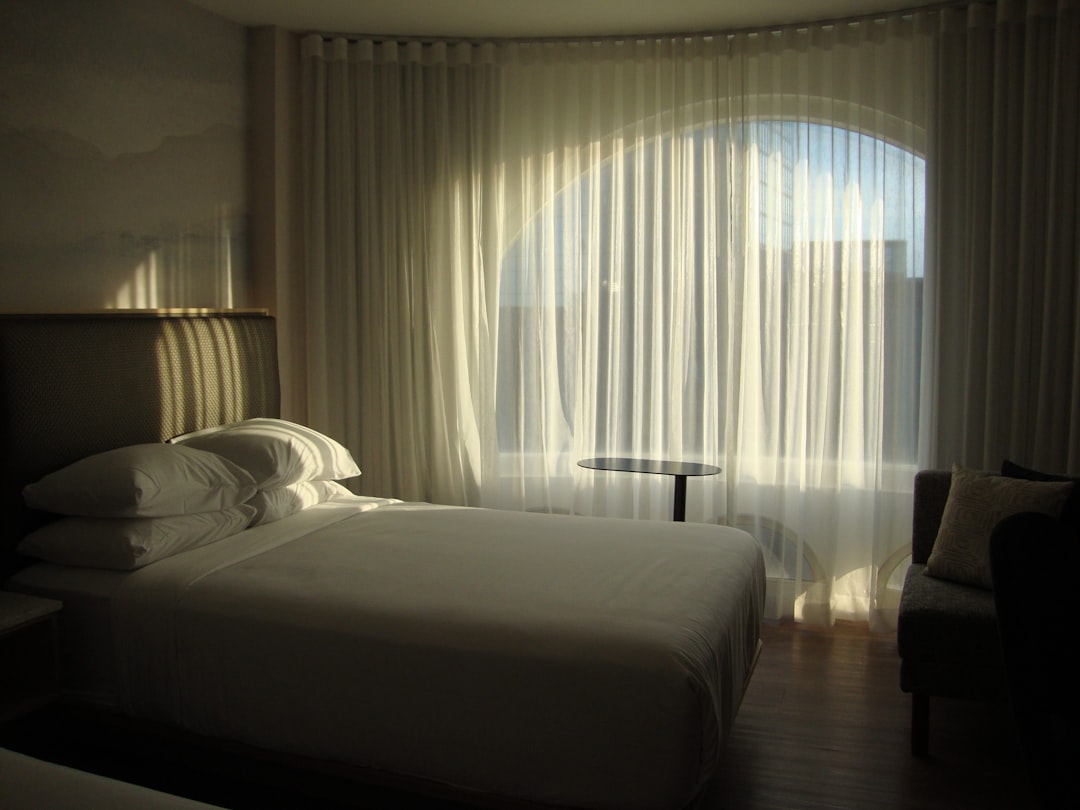
The purpose of these materials is to soften the intensity of intense sunlight & distribute it more evenly throughout the space. Shapes and outlines can be seen from the outside due to the sheer nature of the fabric, but direct views into the house are blocked, especially during the day. Unique Benefits of Singaporean Life. Day curtains provide a special set of advantages & are especially appropriate for specific spaces and tastes in Singaporean homes. optimizing airiness and natural light.
The ability of day curtains to let in an abundance of natural light is one of their best features. Instead of obstructing the sun, they change it, producing a gentle, diffused glow that improves a room’s atmosphere. This is perfect for study spaces, dining rooms, living rooms, & any other area that needs to feel light, airy, and open. They keep a link to the outside, which makes spaces feel bigger and friendlier—a big plus in cities like Singapore. Privacy During the Day Without Losing Light.
Day curtains are a necessary component of daytime privacy for HDBs, condos, and even landed properties with nearby neighbors or public spaces. One can still enjoy the outdoor view and the benefits of daylight even though there is limited direct visibility into the house. However, because day curtains are sheer, they provide little privacy at night when interior lights are on because details and silhouettes can be seen from outside.
Versatility, affordability, and aesthetic appeal. Day curtains provide a great deal of decorative flexibility because they are available in a wide variety of textures, patterns, and colors. Their flowing and light characteristics add to an exquisite and sophisticated look that goes well with a variety of interior design motifs, including bohemian & minimalist. Day curtains are typically less expensive than blackout curtains because they are constructed of less material & frequently simpler textiles.
Also, they are frequently machine washable, lighter, & easier to clean, making maintenance simpler for busy Singaporean households. UV protection and mild glare reduction. Day curtains can greatly lessen the harsh glare of direct sunlight, even though they cannot completely block UV rays.
This makes it more comfortable to read or use electronic screens during the day. They provide some UV protection, which can lessen the amount of sun damage that can be done to flooring & furniture compared to blackout curtains. Restrictions and Useful Points. For day curtains to be applied effectively, it is essential to comprehend their limitations.
Insufficient for Total Darkness or Privacy at Night. Day curtains’ inability to provide total privacy or darkness is their main disadvantage, particularly after sunset when indoor lights are on. They are inappropriate for media rooms that need blackout conditions or bedrooms where getting a good night’s sleep is important. They provide almost no privacy against outside visibility at night due to their very nature. restricted control over heat.
The thin fabric of day curtains provides little thermal insulation, but they can diffuse some direct solar radiation. In comparison to rooms with blackout curtains, they do not considerably reduce heat gain on Singapore’s hot days, so rooms may still feel warm and possibly require more air conditioning. The possibility of fading.
Lighter fabrics are more likely to fade over time, changing their original color and appearance, especially if they are exposed to continuous direct sunlight. UV protection is important for long-term aesthetic integrity, even though it can be helpful. Making the Decision: Blackout vs. curtains for the day.
It is rarely a clear-cut choice between day curtains and blackout. The room’s particular purpose, individual lifestyle, and preferred aesthetic are usually the determining factors. Use cases based in rooms. The secret to maximum comfort and usefulness in your Singaporean home is to properly match the type of curtain to the purpose of the space.
Bedrooms: Rest is the top priority. Blackout curtains are frequently the best option for master bedrooms, kid’s rooms, and guest rooms in HDBs, condos, BTOs, and landed homes. By blocking light, they create the ideal sleeping environment, which is essential for restful sleep. In Singapore’s urban environment, where external lights can be ubiquitous, this is especially crucial.
For people who prefer a gentler morning transition, the blend described below may be perfect. Embracing Natural Light in Dining Rooms and Living Rooms. Day curtains usually work best in these shared areas of your Singaporean home.
They create a light and airy atmosphere by letting in natural light, which gives the space a feeling of openness & warmth. They shield residents from their neighbors during the day without cutting them off from the outside world. Study Spaces and Home Offices: Finding a Balance Between Light and Focus. The decision may be more complex in a home office or study.
For diffused, glare-free light that is ideal for reading & screen work, day curtains are great. The option of total darkness, however, might be chosen if the space is occasionally used as a guest bedroom or viewing area. Outdoor blinds should be taken into consideration when using balconies and areas that face the outdoors. For complete heat & privacy control, Singaporean living rooms & bedrooms with balconies should also take into account options like zip blinds or other outdoor blinds when choosing indoor window treatments. Before the light even reaches the indoor curtains, for example, a balcony with outdoor blinds, such as zip blinds, offers an additional degree of seclusion and protection from the sun. Climate Change & Energy Efficiency.
The tropical climate of Singapore is characterized by constant heat & sunshine. When direct sunlight is a constant problem, especially on west-facing windows that receive strong afternoon sun, blackout curtains are the best option for heat rejection and energy savings. As part of a natural ventilation strategy, day curtains minimize heat resistance while improving airflow when windows are open.
Durability and upkeep. Day curtains are typically easier to maintain, requiring less frequent and thorough cleaning because they are lighter & frequently composed of washable materials. But because they are delicate, they may be more prone to damage if handled roughly. Because of their thick, multi-layered construction, blackout curtains are more resilient, but their long-term maintenance costs may be impacted by the need for professional cleaning. Depending on the material quality and exposure to sunlight, both types of curtains can have a lifespan of five to ten years or longer if properly maintained.
Singaporean cost ranges. In Singapore, the price of curtains varies greatly depending on the fabric, size, and personalization. Day curtains generally cost between SGD 15 and SGD 40 per linear foot.
Because of their unique construction and materials, blackout curtains typically cost between SGD 30 and SGD 80 per linear foot. Costs at the upper end of the spectrum or the total of the individual components will inevitably be incurred by layered solutions that combine both. Layering’s Versatility. The best option for many Singaporean homeowners is a combination of both, rather than an either/or decision. By combining day and blackout curtains, you can get the best of both worlds: unmatched flexibility in terms of light, privacy, and temperature control.
Realizing Control over Dynamic Light and Privacy. A blackout curtain is usually installed on an outer track or rod, and a sheer day curtain is usually placed closer to the window pane in a layered arrangement. You can do the following with this arrangement. During the day: With the sheer curtains drawn, take advantage of the plentiful natural light & privacy. For total darkness & privacy at night, draw the blackout curtains.
Flexibility: You can quickly switch between these states according to your preferences, the weather, and the time of day. To maximize heat exclusion, for instance, both sets can be drawn on hot afternoons. Improved thermal performance and aesthetics. A window treatment gains depth & richness from layering, giving it a more elegant and opulent appearance. The blackout curtain’s potentially bulky appearance can be lessened by the sheer curtain.
Practically speaking, the combined thickness of layered curtains offers better noise reduction and thermal insulation than either type alone. Given Singapore’s climate, this can further improve indoor comfort & energy efficiency. Connecting Smart Home Systems.
Both day & blackout curtains can be motorized and integrated into smart home lighting and climate control systems for the tech-savvy Singaporean homeowner. Blinds and curtains with motors provide improved functionality and convenience. Whether a home is in an HDB, BTO, condo, or landed property, sensors that detect temperature or ambient light levels can automatically adjust the curtains for the best possible light, privacy, and heat control.
Finally. One of the most important decisions in designing the comfort and atmosphere of your Singaporean home is whether to use blackout or day curtains, or even a combination of the two. For peaceful bedrooms and concentrated media areas, blackout curtains are essential because they promote privacy, light exclusion, and heat insulation. Day curtains are excellent for enhancing the visual airiness of living spaces, providing subtle privacy, and celebrating natural light.
You can choose the perfect window treatment that not only satisfies functional needs but also complements your lifestyle, guaranteeing a cozy, effective, and lovely living area, by carefully taking into account the unique requirements of each room, the effects of Singapore’s heat & sun, and your own personal style preferences.
.
FAQs
What are blackout curtains?
Blackout curtains are window coverings made from thick, tightly woven fabric designed to block out nearly all external light. They are commonly used in bedrooms, media rooms, or any space where complete darkness is desired.
How do blackout curtains differ from day curtains?
Blackout curtains are made to block light and provide privacy, while day curtains are typically lighter, allowing natural light to filter through while still offering some level of privacy. Day curtains are often used to soften sunlight and add decorative appeal during the daytime.
Can blackout curtains help with energy efficiency?
Yes, blackout curtains can improve energy efficiency by providing insulation. Their thick fabric helps reduce heat loss in winter and blocks heat from entering in summer, potentially lowering heating and cooling costs.
Are blackout curtains suitable for all rooms?
While blackout curtains are ideal for bedrooms, nurseries, and media rooms where darkness is preferred, they may not be necessary or desirable in living rooms or kitchens where natural light is beneficial.
Do blackout curtains affect noise levels?
Blackout curtains can help reduce outside noise to some extent due to their dense fabric, but they are not soundproof. For significant noise reduction, specialized acoustic curtains or additional soundproofing measures may be needed.