From large landed properties to contemporary condominiums and HDB apartments, bedroom curtains are a necessary component of Singaporean homes. In addition to their aesthetic value, they are essential for establishing a comfortable sleeping environment, especially in tropical climates with plenty of sunlight & widespread light pollution. This article explores different curtain systems for bedroom light control, with an emphasis on layered, blackout, and dim-out options.
You can make well-informed choices based on your unique requirements for energy efficiency, privacy, and sleep quality by being aware of these options. Singapore’s geographic location guarantees plenty of daylight all year round, which is good for general health but can make it difficult to get a good night’s sleep. If not properly controlled, the sun’s intense rays can raise interior temperatures & interfere with circadian cycles. Strong privacy solutions are frequently required for HDB residents due to their close proximity to streetlights, nearby apartments, and common areas.
While residents of landed homes may want to maximize natural light without sacrificing privacy or temperature control, condo occupants on higher floors may face intense sun exposure and glare. Ensuring a personal haven, reducing heat gain, and blocking unwanted light are all addressed by effective bedroom lighting control. Impact of Light on the Quality of Sleep. The hormone that controls sleep-wake cycles, melatonin, can be interfered with by exposure to light, particularly blue light from electronics and daylight.
Deeper, more rejuvenating sleep is encouraged in a dark bedroom. Sleep patterns can be disturbed by both direct sunlight and ambient light from outside sources, even ones that appear dim. It is therefore crucial to be able to regulate the level of darkness in a bedroom.
Controlling the heat and glare. Singapore’s equatorial sun can cause a lot of heat gain indoors, which increases the need for air conditioning. The thermal qualities of curtains intended for light control can help insulate windows & lessen the amount of heat that enters the space. This can result in energy savings in addition to improving comfort.
| Curtain Type | Light Control Level | Material | Thermal Insulation | Privacy | Typical Thickness | Common Uses |
|---|---|---|---|---|---|---|
| Blackout Curtains | 100% Light Blockage | Polyester, Triple-weave fabric | High | Complete Privacy | Heavy, 8-12 oz/sq yd | Bedrooms, Media rooms, Nurseries |
| Dim-Out Curtains | 70-90% Light Reduction | Thick cotton blends, Polyester | Moderate | High Privacy | Medium, 5-8 oz/sq yd | Living rooms, Bedrooms with some natural light |
| Layered Curtain Systems | Variable (depends on layers) | Combination of sheer + blackout or dim-out | Variable | Adjustable Privacy | Varies by layer | Flexible light control, decorative purposes |
Also, reading and using electronics in the bedroom can be hampered by the uncomfortable glare of direct sunlight. This glare is reduced by efficient light control, making the room more comfortable and useful. Blackout curtains are a popular option for people who need total darkness to sleep, shift workers, or those setting up a home theater because they are designed to block out a large percentage of incoming light. The operation of blackout curtains.
The special design of blackout curtains is what makes them so effective. Usually, they have a dense backing composed of acrylic foam or a laminated layer & a tightly woven fabric. This backing creates an opaque barrier that keeps light out. Although there is some variation in the level of blackout, these curtains typically aim for 90–100% light blockage.
This is especially helpful in Singapore, where the morning sun can be very strong, creating a setting that is ideal for restful, deep sleep. levels of blackout. To help consumers, the industry typically classifies blackout levels as follows.
Medium Blackout (70–80%): Mainly intended to reduce glare and increase privacy during the day. Even though it darkens a room a lot, some light may still be visible around the edges, making it ideal for people who would rather wake up naturally as the sun rises. High Blackout (85–95 percent): Provides a lot of darkness, making it perfect for most people who want a much darker sleeping space.
This level permits a small amount of light to enter, which some people find helps them wake up gradually. Full Blackout (90–100%): Provides almost total darkness, accurately simulating nighttime conditions even during the day. For deep sleepers, baby nurseries, or people who are light-sensitive while they sleep, this is the best option.
benefits and drawbacks of blackout curtains. Advantages. Superior Light Blockage: Improves the quality of sleep by efficiently blocking out nearly all outside light.
Enhanced Privacy: Prevents outsiders from seeing into the room, providing total visual privacy. Thermal Insulation: Although less useful in Singapore’s perpetually warm climate, the thick layer of fabric serves as an insulator, lowering heat loss in colder weather & heat transfer in warmer weather. This may help Singaporean homes use less energy for air conditioning. Noise Reduction: HDB & condo residents who live in busy urban areas will greatly benefit from the thick material’s ability to absorb sound and provide some acoustic insulation from outside noise sources.
UV protection: Prevents damaging UV rays from fading artwork, flooring, and furniture. Drawbacks. Limited Natural Light: During the day, they completely block out natural light when closed, giving the impression that the room is enclosed. Aesthetics: Certain blackout textiles may seem bulkier or more functional than ornamental. In certain developments, the external façade regulations may not always be in line with the plain, uniform color of the reverse side facing outward.
Maintenance: Cleaning may be more difficult due to the thick fabric. Cost: Because of their unique construction, they are typically more costly than regular curtains. Use cases that are room-based. Master Bedroom: For people or couples who value restful sleep.
Children’s bedroom or nursery: necessary for early bedtimes & nap schedules. Guest Bedroom: Offers guests a cozy place to sleep. Full darkness improves the viewing experience in media rooms. Dim-out curtains provide a compromise between solid blackouts & transparent sheers. For bedrooms where some natural light is preferred, they are a popular option because they lessen the amount of light entering the space without producing total darkness.
This is how dim-out curtains operate. Generally speaking, dim-out fabrics are less opaque than blackout materials but more opaque than regular decorative curtains. They frequently have a unique lining that filters a large percentage of light, typically between 50 and 80 percent, or are constructed from fabrics that are tightly woven. This keeps the space feeling light and spacious while dispersing the sunlight, reducing glare & harsh shadows. Dim-out curtains: advantages and disadvantages.
Advantages. Glare Reduction: This effectively lessens the sun’s harsh glare, improving the room’s comfort during the day. Moderate Privacy: Offers good privacy during the day, but if indoor lights are on at night, silhouettes may be visible. Softer Ambiance: Compared to complete blackout, it produces a pleasant, natural light that is diffused. Aesthetics: Compared to blackout materials, they frequently come in a greater variety of ornamental fabrics and colors.
Thermal Properties: Helps to keep Singapore’s interior temperatures lower by providing a certain amount of thermal insulation. Cons:. Not Complete Darkness: This feature might not be appropriate for light-sensitive sleepers since it won’t produce total darkness.
Privacy Issues at Night: You might not be able to get total privacy at night, which calls for extra window treatments or cautious lighting. Less Noise Reduction: Generally speaking, true blackout curtains are more effective at reducing outside noise. Use Cases for Rooms. Older children’s bedrooms: When playing or reading, some light is ideal. Guest bedrooms: Provide a cozy, well-lit space.
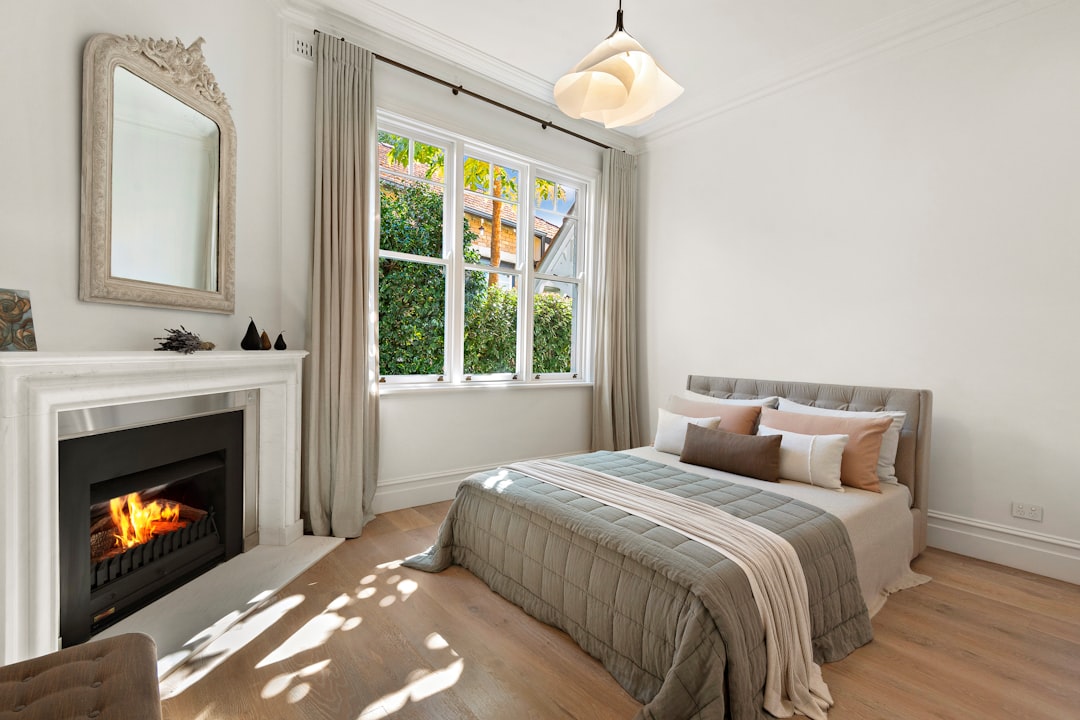
Study Nooks in Bedrooms: Offers enough light for activities during the day without being overly bright. Layered light control systems are highly preferred in current interior design trends, especially in 2026. This method offers unmatched flexibility in controlling light, privacy, and thermal comfort by combining various window treatments. Pairing a sheer curtain with a blackout drapery or a blackout Roman shade is the most popular layering technique. parts that make up a layered system.
Sheer curtains: These lightweight, translucent materials provide a minimal amount of privacy during the day while letting in gentle, diffused natural light. They keep the room from feeling totally enclosed and preserve a connection to the outside world. Sheers can also make the window look softer overall. Roman shades or blackout draperies are placed behind the sheer layer and are used when complete darkness or seclusion is needed.
While Roman shades give off a crisp, structured appearance, draperies offer a grander, more flowing appearance. Both control & flexibility. Adaptability is a layered system’s main benefit. By using only the sheer curtains during the day, you can take advantage of natural light and some privacy. The blackout layer can be drawn or lowered to achieve total darkness and maximum privacy as evening draws near or when rest is required.
With its ability to maximize light and promote deep sleep, this dual-layer combination is perfect for Singaporean bedrooms. Layered systems have advantages and disadvantages. Pros:. Maximum Flexibility: Enables exact control over light levels, ranging from completely dark to softly lit natural light. By dimming the “lights” in your bedroom when necessary, you can control the atmosphere there. Full nighttime privacy from the blackout layer and daytime privacy from sheers are combined to create enhanced privacy.
Aesthetic Appeal: Provides a deep and textured appearance that is opulent. The way various textiles interact can greatly improve the room’s aesthetic. Improved Thermal Insulation: The numerous layers provide extra insulation, which helps regulate temperature and improves energy efficiency in air-conditioned areas, such as many HDBs and condominiums in Singapore. Noise Reduction: Compared to individual treatments, the combined layers provide better sound absorption. Drawbacks.
Higher Cost: Compared to single-layer options, it is typically more expensive because it requires buying two distinct window treatments. More Complex Installation: To support both layers, a double curtain rod or track system is needed. Increased Maintenance: Although sheers are frequently machine-washable, two sets of curtains require twice as much cleaning. Bulkier Appearance: In smaller HDB bedrooms, this could be an issue because it can take up more room at the window. Use cases that are room-based.
Every Type of Bedroom (HDB, Condo, Landed): Offers the most adaptable option for people who want complete darkness and natural light at different times. Rooms with Different Lighting Requirements: Perfect for bedrooms that are used during the day as study spaces or reading alcoves. Curtains for bedrooms are not an exception to the growing trend of incorporating technology into home furnishings. Unmatched convenience and sophisticated control over light, privacy, and even energy efficiency are provided by motorized and smart curtain systems.
Operation of Motorized Curtains. A tiny, silent motor that enables remote opening and closing is a feature of motorized curtains. These systems usually make use of a rod with internal mechanisms or a track system with a continuous loop. This is further enhanced by smart curtains, which integrate with smart home ecosystems. Control your curtains with an app on your phone or by speaking to smart assistants (e.g. 3.
Amazon Alexa, Google Assistant, etc.). Imagine simply saying “Goodnight” to have your smart lights dim and your blackout curtains automatically close. Automation: Configure timetables to open & close curtains at predetermined intervals (e.g. “g.”. progressively opening for a mild awakening every morning. Sensors: Some sophisticated systems have the ability to link to temperature or light sensors, which allows them to automatically adjust the curtains to maintain ideal indoor temperatures.
For example, you can partially close the curtains to reduce heat gain when the afternoon sun is shining on your balcony. Cord-free options are a safer option for homes with kids & pets, which is important for families living in HDBs and condos because they do away with dangerous cords. Smart/motorized curtains: advantages and disadvantages.
Pros:. Convenience: The ability to operate with ease using a voice command, button press, or automated schedule. Particularly helpful for large windows or windows in difficult-to-reach places, like those found in high-ceiling condos or some landed properties. Improved Sleep Cycle: By simulating a natural sunrise, gradual opening can help you wake up more gently. Enhanced Security: It can be set up to open and close when you’re not home, creating the impression that it is occupied.
Energy Efficiency: Given Singapore’s climate, automation can help control heat gain and loss, which could lower air conditioning expenses. Accessibility: Helpful for people with mobility issues. Safety for children and pets: choking hazards are eliminated by cord-free designs.
Drawbacks. Greater Initial Cost: Because of the motorization & smart home integration, this system is much more costly than manual curtain systems. Installation Complexity: Needs expert installation or a solid grasp of electrical wiring for intelligent integration. Dependency on Power/Battery: Motors need power; this can be obtained through direct wiring or rechargeable batteries, which calls for a power outlet or sporadic charging. Motors may need to be maintained or repaired if they break down, even though contemporary systems are usually dependable.
Use Cases for Rooms. Master bedrooms: For the highest level of comfort & seamless integration with an advanced smart home. High windows or skylights: In situations where manual labor is not feasible. Children’s Rooms: For planned naps and cordless safety. Bedrooms in “Smart Homes”: Smooth interaction with other smart gadgets to create a unified lifestyle.
A number of useful considerations beyond light control should be carefully taken into account when choosing bedroom curtains in Singapore. Climate Factors. High levels of heat and humidity in Singapore’s tropical climate affect maintenance requirements and material selections.
Heat Mitigation: Light-regulating curtains of all kinds help to lessen solar heat gain. For thermal insulation, blackout and layered systems are the best options. Seek out textiles with superior insulating qualities. Humidity: Although curtains cannot stop humidity directly, the type of fabric used can affect the growth of mildew.
To reduce moisture absorption, choose treated natural fabrics or synthetic blends. Mildew can also be avoided by maintaining adequate air circulation & routine cleaning, particularly for curtains that are near the balcony. UV Exposure: Over time, curtain fabrics may fade due to the strong UV radiation. Better UV protection is provided by high-quality curtains, especially those with a lining or blackout layer, for both your interior furnishings & yourself. Singaporean Cost Ranges (Estimated).
The price of bedroom curtains in Singapore varies greatly depending on the size, fabric quality, system complexity, and type of property—landed, BTO, HDB, or condo. Simple Blackout/Basic Dim-out (Manual): S$80 to S$300 per meter width (including basic track/rod, fabric, and sewing). A typical HDB bedroom window will cost between S$250 & S$800.
Manual Layered Systems: S$150 to S$500 per meter (for both layers combined). A typical setup might cost between S$500 and S$1500. Smart & motorized systems: significantly higher. For every meter of width, a basic motorized blackout curtain can cost between S$400 and S$800. Depending on motor quality, brand, and smart home compatibility, a fully integrated smart system for a typical window can cost anywhere from S$1,000 to S$3,000 or more.
These are estimates that may change depending on the hardware, installation needs, & particular fabric choices. Get thorough quotes at all costs. Maintenance Advice. Your blinds and curtains will last longer and look better with routine maintenance.
Vacuuming and dusting: Using a brush attachment or dusting with a microfibre cloth on a weekly or biweekly basis helps eliminate dust and allergens & prevent accumulation, which is particularly crucial in Singapore’s dusty environment. Spot Cleaning: Use a damp cloth and a mild detergent right away to clean up spills or stains. First, test a discrete location. Professional Cleaning: Every one to three years, curtains should undergo a professional dry cleaning, depending on the type of fabric.
This could be the only safe way to clean heavy blackout curtains. Check the manufacturer’s instructions before washing lighter sheer fabrics in the washing machine on a gentle cycle. Humidity Management: To avoid moisture buildup on curtains, especially those near windows or balcony doors, make sure the bedroom has adequate ventilation. Motorized Systems: Make sure the tracks are free of obstacles for motorized curtains.
Batteries may require periodic replacement or recharging. duration of life. The quality of the fabric, exposure to sunlight, humidity, and upkeep all affect how long Singaporean bedroom curtains last. Budget/Standard Curtains: three to seven years. Under the strong Singaporean sun, fabrics may fade or deteriorate more quickly. Quality in the middle: 7–12 years.
Higher-quality linings and textiles provide better resistance to wear and UV rays. Premium/tailored curtains with linings: ten to fifteen years or more. Their lifespan can be greatly increased by using high-quality fabrics, sturdy hardware, & protective linings, which makes them an excellent long-term investment.
Although many contemporary motors are built to last longer, motorized components usually have a lifespan of five to ten years. Their operational life may be increased with routine maintenance. In Singapore, choosing the right bedroom curtain system necessitates weighing your preferences for privacy, energy efficiency, darkness, and aesthetics.
Whether you choose the convenience of motorized solutions, flexible layered systems, soft dim-out fabrics, or sturdy blackout curtains, each option offers unique benefits designed to create your perfect sleeping environment.
.
FAQs
What are the differences between blackout and dim-out curtains?
Blackout curtains are made from thick, tightly woven fabrics designed to block nearly 100% of incoming light, making them ideal for complete darkness. Dim-out curtains, on the other hand, use lighter materials that reduce light significantly but do not eliminate it entirely, providing a softer, filtered light effect.
How do layered curtain systems improve light control in a bedroom?
Layered curtain systems combine multiple types of curtains, such as a sheer layer with a blackout or dim-out layer. This setup allows for versatile light control, enabling you to adjust the amount of natural light entering the room by using the sheer curtains during the day and closing the blackout or dim-out curtains at night.
Can bedroom curtains help with temperature regulation as well as light control?
Yes, many bedroom curtains, especially blackout curtains, also provide thermal insulation. They can help keep a room cooler in the summer by blocking sunlight and warmer in the winter by reducing heat loss through windows, contributing to energy efficiency.
What factors should I consider when choosing curtains for light control in my bedroom?
Consider the level of darkness you need, the style and color that match your decor, the fabric’s thickness and opacity, and whether you want additional features like thermal insulation or noise reduction. Also, think about the curtain length and mounting options to ensure effective coverage of your windows.
Are blackout curtains suitable for all bedroom window types?
Blackout curtains can be used on most window types, but their effectiveness depends on proper installation. For best results, curtains should be wider and longer than the window frame to minimize light leakage around the edges. In some cases, combining blackout curtains with blinds or shades can enhance light control.